Talk to one of our specialists about your travel plans and get appropriate advice. When you are ready to book your safari, we shall send you more details.
We are very flexible
We offer both advance and last minute bookings. Should you ever need to make changes to your plan, we shall recustomize your package to suit your needs.
Explore with confidence
We value your safety so much that we assign personal advisors to you in case you need any information urgently. Our advisors are available 24/7.
Gorilla trekking in Uganda
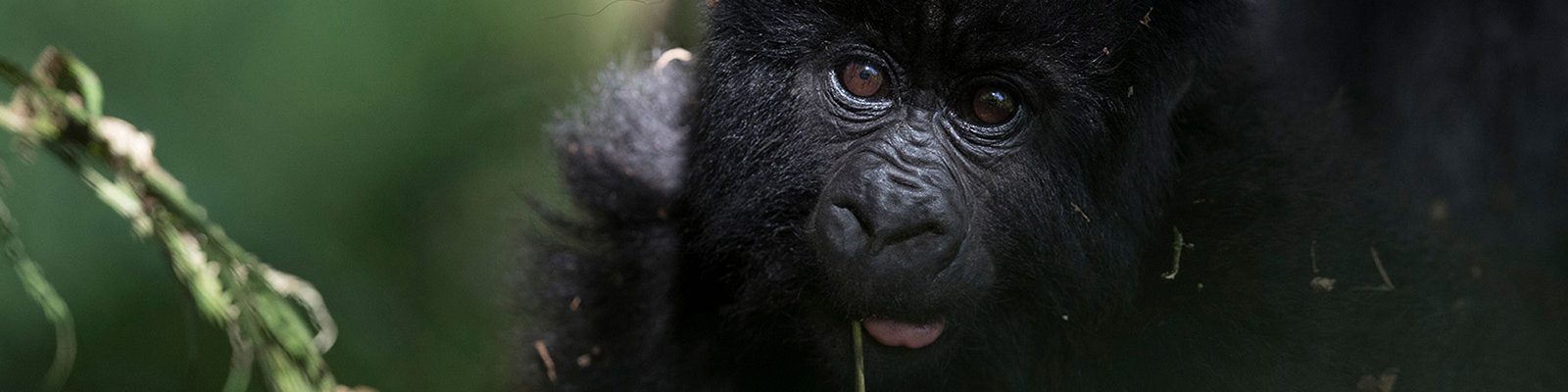
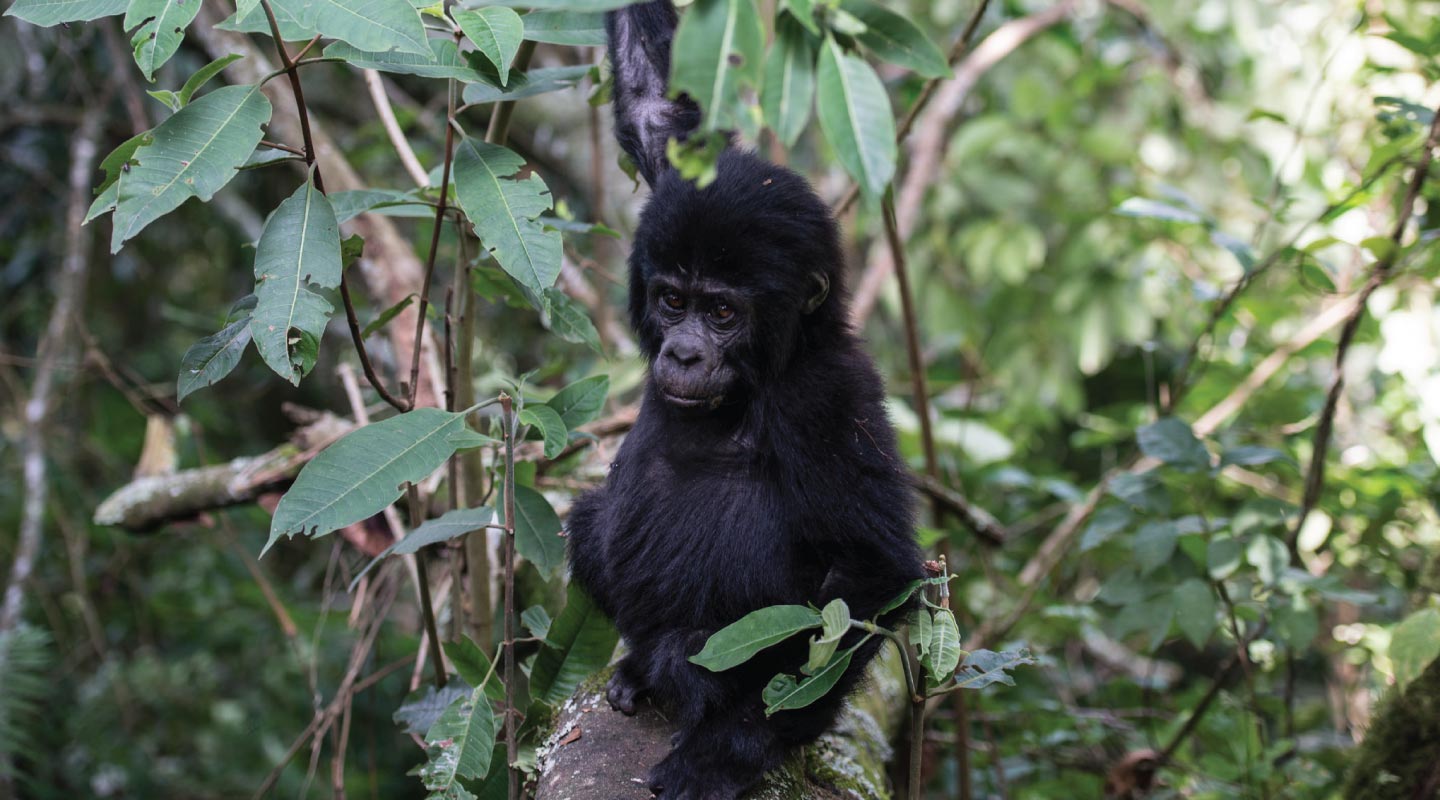
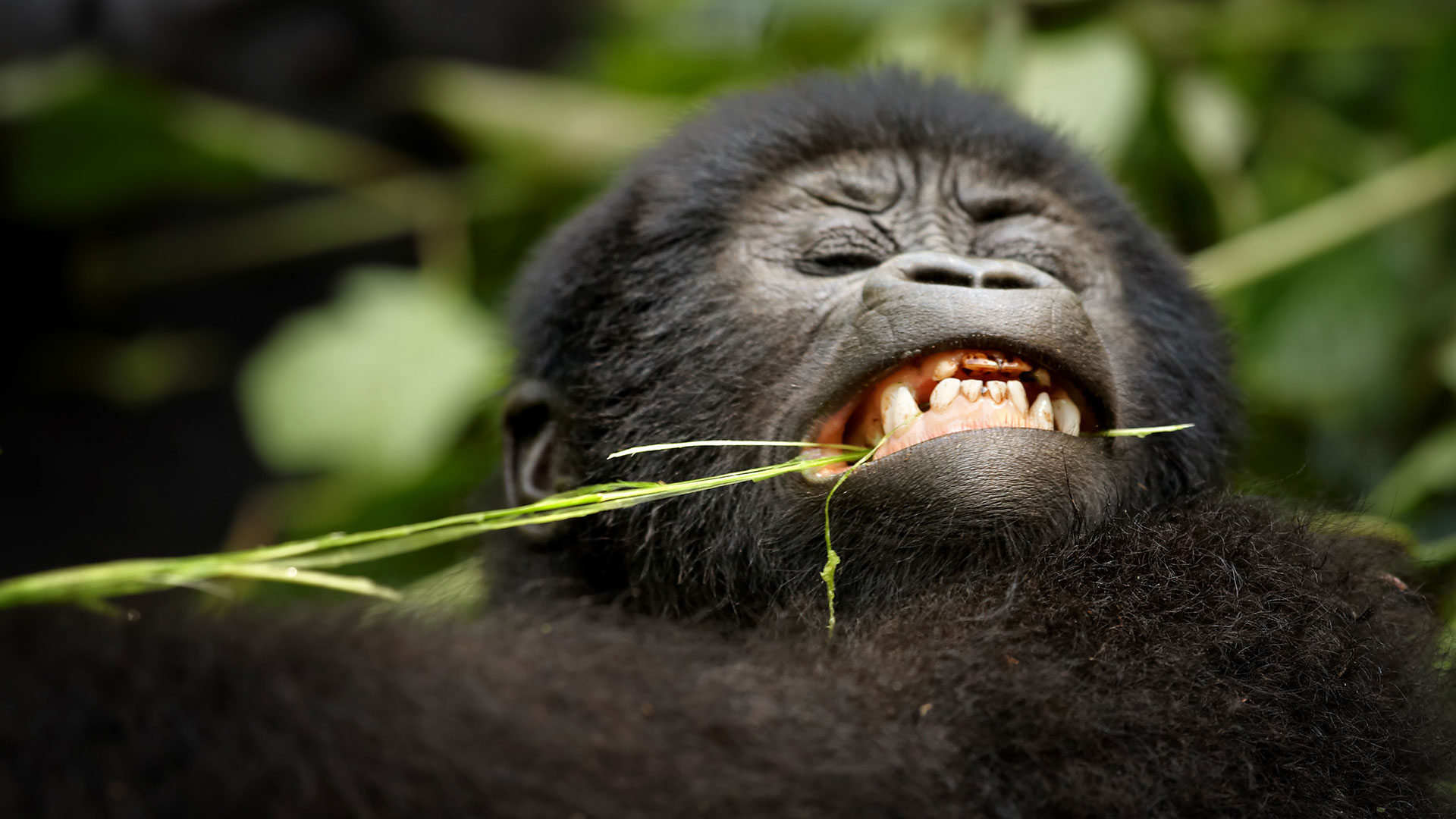
Gorilla trekking in Uganda is a once-in-a-lifetime opportunity to see the amazing mountain gorillas on the Virunga slopes and in Bwindi Impenetrable National Park. Travelers who have taken this Uganda safari highly recommend it. According to some, no other wildlife encounter in Africa compares to the unforgettable thrill of getting up close and personal with Uganda’s wild gorillas in their natural habitat.
Mountain gorillas cannot thrive outside of their natural habitat and thus cannot be kept in zoos. They can only be found in Uganda, Rwanda, and the Democratic Republic of the Congo, two isolated rainforest jungles in east and central Africa. These nations are fiercely guarding the last few enormous apes, much like a medieval king’s fortress. Mountain gorillas can only be seen by visiting one of the three independent countries.
Uganda’s two gorilla trekking destinations are Bwindi Impenetrable National Park and Mgahinga Gorilla National Park. Bwindi is by far the more popular option owing to its larger gorilla population, superior location for fly-in safaris, and a wider range of lodging options. Your gorilla trekking destination will be largely determined by your overall itinerary and the amount of time you have. Permit costs and sighting probabilities are the same in both parks.
Both Bwindi and Mgahinga are located in deep southwestern Uganda, near the borders with Rwanda to the south and the Democratic Republic of the Congo to the west. Many safari destinations can be found in Uganda’s southwestern region. This makes it simple to combine a gorilla trek and a savannah safari into a single itinerary jam-packed with unforgettable experiences. Uganda is a small country, but with a lot to offer.
Gorilla Trekking in Bwindi Impenetrable National Park
Bwindi is the main destination for gorilla trekking in Uganda with four trailheads here for habituated families; Buhoma, Ruhija, Rushaga, and Nkuringo. Each trailhead’s gorilla families have its characteristics, families, and levels of difficulty in terms of trekking. You join a group of trekkers (maximum group size of 8 people) for a guided trip into the forest in search of one of the 21 habituated gorilla families.
You will learn about the ecology of the forest and the shifting environment as you hike to the gorillas with knowledgeable Uganda Wildlife Authority guides. Your guides are in contact with the group of trackers who have been following the gorillas since dawn. The trackers direct your guides to take you to the gorillas.
Gorilla trekking in Uganda
There is only one daily trek that departs from the base camp; it can only accommodate groups of 8 people and usually departs at 8:00 a.m. The maximum group size is set to protect gorillas from airborne infections and to increase the likelihood of sightings because larger groups frequently scare these (surprisingly) timid animals away.
Right away, the soaring southwest-oriented slopes and terraced volcanoes present a daunting opponent. To reach this gorilla region, you must trek through dense, triffid-like vegetation, muddy hills, and down into rocky valleys. The journey is exhausting due to the challenging terrain and high altitude, but the perks are even more incredible.
Encounters with the gorillas
After making contact with the gorillas, there is usually a silent pause in the thick vegetation. When the gorillas do emerge, it is a truly breathtaking experience to see them in their natural habitat, with the lush forest serving as the perfect backdrop. The rustling of leaves as the gorillas play and roam quickly breaks any solitude, and the calls, whistles, and whoops of numerous animal species for miles around provide the perfect soundtrack. After making contact, you have up to an hour with the gorillas. If you want to spend more time with the gentle giants, you can sign up for a gorilla habituation encounter and spend up to four hours with them.
Sectors for gorilla trekking in Bwindi
Bwindi has four trailheads from which habituated families can be reached namely; Buhoma, Ruhija, Rushaga, and Nkuringo. Each trailhead has its characteristics, families, and levels of difficulty. Treks to 21 fully habituated gorilla family groups can begin at the trailheads. The typical walks begin early in the morning and last up to two hours, during which time you can observe gorillas from about ten meters away. Although the majority of sightings occur within 2-3 hours, the treks can be challenging, and you should be ready to trek for up to 6 hours.
Gorilla Trekking in Mgahinga Gorilla National Park
Because it is close to the Rwandan border, Mgahinga National Park is a popular option for cross-country itineraries with Rwanda’s Volcanoes National Park. Furthermore, it is the only place in Uganda where you can go golden monkey trekking. A popular option is to combine a gorilla trek in Mgahinga with a visit to Bwindi. Mgahinga is more remote than Bwindi, the hikes are easier. There are fewer permits available here. Even though gorilla families frequently cross the border from Rwanda to Uganda, only one family has become accustomed to making contact in Mgahinga. The Nyakagezi group consists of five silverbacks, two adult females, and three baby gorillas.
Mgahinga was once used as an “overflow” location for Bwindi gorilla trekking, but this has changed due to two factors. The first is that, because Rwandan gorilla permits are now $1,500 per person, tourists are opting to tour Rwanda first before crossing the border to Mgahinga, where treks are only $700 per person. The second justification is the beauty of Mgahinga as a safari destination. Because it is so close to the lakes Mutanda and Bunyonyi, you could spend a week relaxing in the far southwest of Uganda and save the rest of the country for another trip.
Mgahinga’s volcanoes can also be climbed; these climbs are extremely difficult, exceeding 4,000 meters and taking 8 to 9 hours, but they are also very rewarding. Mgahinga accounts for only 10% of all gorilla treks in Uganda; the vast majority take place in Bwindi!
The best time to go gorilla trekking in Uganda
Uganda’s equatorial climate keeps temperatures relatively stable throughout the year. Rainfall is the only factor that distinguishes the seasons. March to May is the long rainy season, and October to November is the short rainy season. It is possible to visit the gorillas at any time of year. The drier months however present better conditions for trekking. The trails are dry and the chances of rain are less during this time. The gorillas are also more active and you get to enjoy them as they roam around in search of food. Because permit rates are set year-round, the best time to visit should be determined by your availability, the availability of gorilla permits, and your other vacation plans.
How do you get a gorilla permit?
A gorilla permit currently costs USD 700 per person for foreign non-residents, $600 for foreign residents, and 250,000/= for East African citizens. Although permits are no longer cheaper during the rainy season, they are still easier to obtain on short notice if you are visiting Uganda during the short or long wet season (March to May or October to November). During the busiest travel seasons, permits can sell out up to a year in advance (January through February and June through August). Because the number of permits is strictly limited, we strongly advise making plans as soon as possible.
One advantage of seeing gorillas in Uganda is the lower cost of permits compared to neighboring Rwanda, where permits currently cost an eye-watering USD 1500 per person. If an hour of contact isn’t enough, if you’re a wildlife photographer, or if you’re simply fascinated by the behavior of these incredible animals, you can also join the habituation team in the Rushaga area of southern Bwindi. This experience entails spending up to four hours with the family and observing the members’ interactions. Although gorilla permits are non-refundable, the Uganda Wildlife Authority will reimburse half of your trek fee if you do not see a gorilla. This, however, is extremely rare.
What is the difficulty level of the gorilla trek?
One should be prepared to walk for 3 hours over difficult terrain with rocky peaks and valleys, with contact possible after 45 minutes and sometimes taking 6 hours. During the wet season, the trekking routes can become extremely slick and difficult. You should be prepared to walk in any scenario, but rain may cause the gorillas to move to lower ground, hence shortening the walk. The walk is more difficult because the terrain is steep at times, and gorillas prefer the highlands.
What should you wear on a gorilla trek?
Charging through the undergrowth of forests at Bwindi and Mgahinga requires a carefully calculated get-up. Because you are on the equator, you must be prepared for rain at any time of year. You’ll need to stay cool for the 2 to 6 hours of trekking, so wear clothing that protects you from the elements while remaining lightweight and comfortable. Keep your skin covered to protect yourself from forest crawlies (especially fire ants) and spiky plant life. You’ll want to stay dry while remaining comfortable and cool.
Light, waterproof trekking shirts or pants, as well as sturdy, high-quality hiking footwear, are required. To protect your skin, wear long socks that you can pull up over your jeans or other clothing. Waterproof gaiters are an even better option. A windbreaker, raincoat, and waterproof jacket are all options. A hiking T-shirt with long sleeves (ideally Dri-FIT or similar). Gardening or outdoor gloves protect you from thorns and allow you to move through the more difficult sections of the trail without worrying about what you’re holding onto!
We also recommend bringing some rehydration salt sachets. Even though water is provided for the hikes, you may become dehydrated after a full day of hiking, in which case salts may provide immediate relief. You can use walking sticks if you want to.
Gorilla trekking Rules and Regulations
Before you embark on any trek, the park guides will brief you on the regulations to follow while gorilla tracking. It is critical that you pay close attention to this briefing and adhere to the instructions provided. The following are the main points:
Following the initial encounter, you will have an hour with the gorillas. Although one hour may not appear to be much time, most people believe that it is more than enough time to fully appreciate the event. If you join the gorilla habituation team, you will be able to spend up to 4 hours with the gorillas if you prefer a longer experience. The practice of going on 2 distinct gorilla hikes in different parts of the park. A minimum distance of 10 meters must be maintained at all times, and flash photography is not permitted. You will be unable to participate in the gorilla trekking in Uganda if you become ill before the expedition. Do not leave litter in the forest. In the presence of gorillas, do not drink, eat, or smoke.
Is it possible to see gorillas?
Because of the increase in gorilla populations in Uganda and the expertise of your trekking guide, encounters are almost always made in Bwindi or Mgahinga. We cannot, however, guarantee sightings. However, you must be ready and able to put in the effort because finding a habituated troop may take up to 6 hours of trekking. If you do not see the gorillas, the Uganda Wildlife Authority will refund 50% of your permit fee. During our entire time working in Uganda, we have never had a visitor who did not see the gorillas.
Accommodation in Bwindi Impenetrable National Park
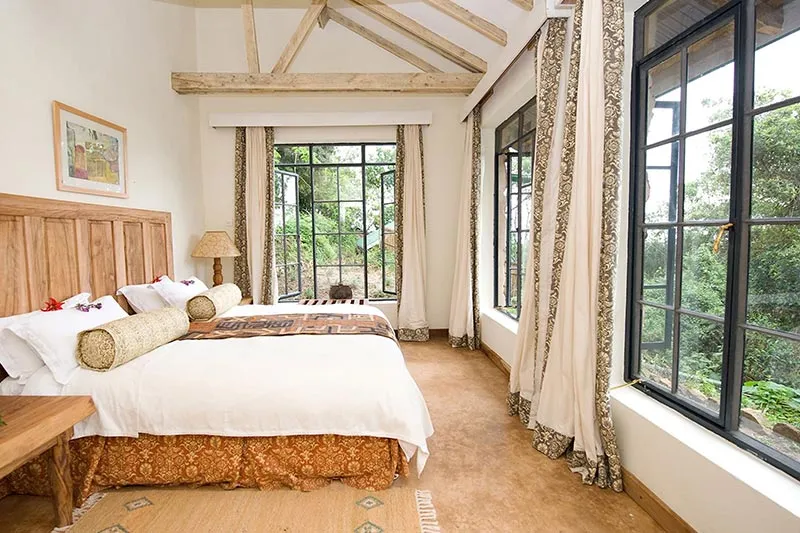
The vast majority of the lodges in the Bwindi area are located in the Buhoma region. From Buhoma, you can hike the Buhoma and Ruhija routes. Simpler establishments, such as Engagi Lodge and Haven Lodge, have developed devoted followings over time. Gorilla Forest Camp and Bwindi Volcanoes Lodge are two of the best options, while Mahogany Springs and Buhoma Lodge are reliable mid-range options. Although Rushaga and Ruhija have properties, they are less frequently used.
Despite being closer to the trailheads, reviews on the lodging and service quality are frequently inconsistent. Clouds Mountain Gorilla Lodge provides chic, opulent lodging in the deep south, while Nkuringo Lodge is a slightly more basic—but rapidly improving—alternative. These accommodation facilities as your embark on these life altering Gorilla trekking in Uganda.